

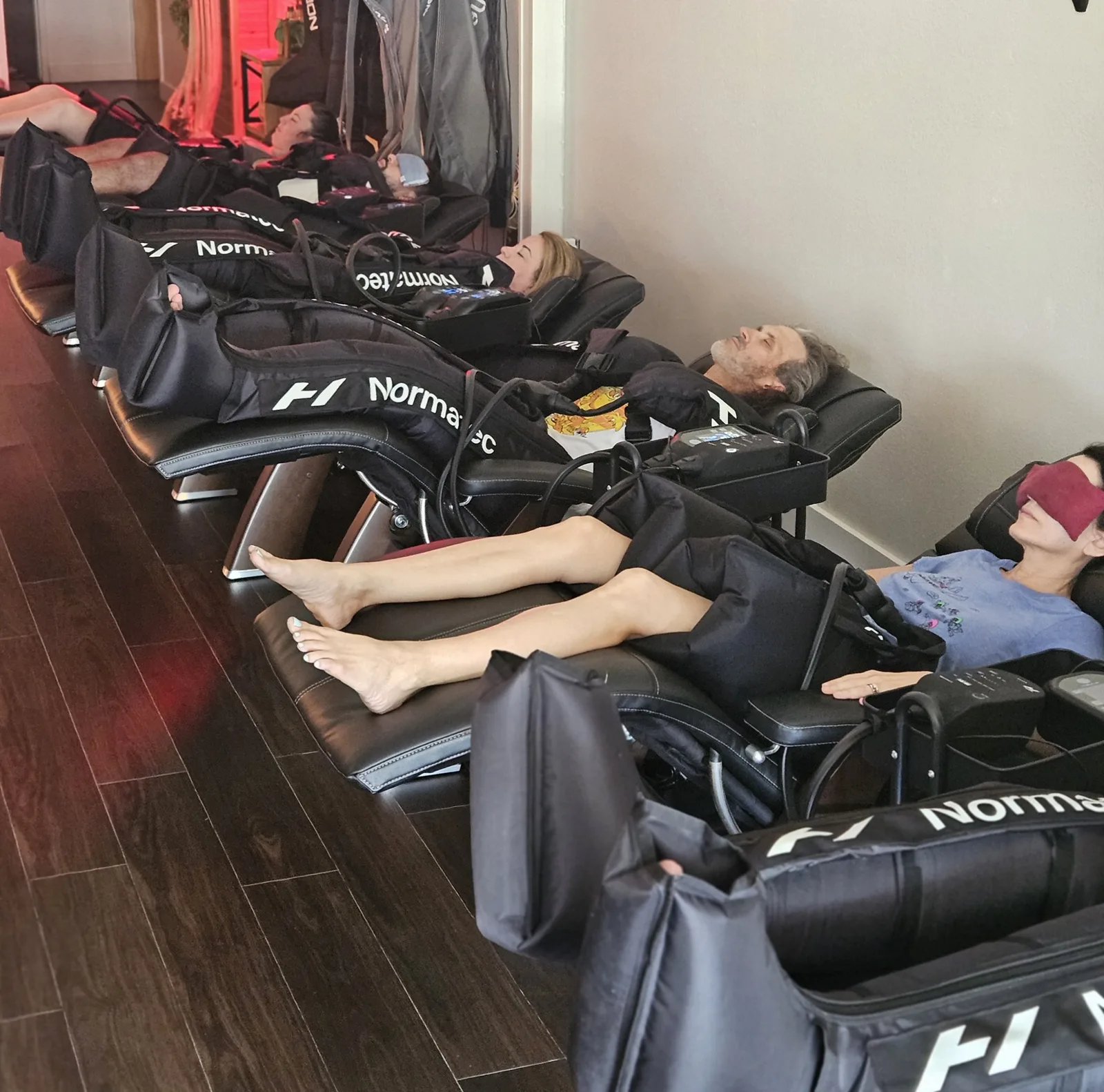
Take a seat. Let recovery unfold.
Rhythmic air compression for your arms, hips, or legs—a restful addition to your recovery visit, with fit and pressure adjusted for comfort.
How pneumatic compression works
Inflatable garments apply and release pressure in cycles. Depending on the attachment, that sequence supports the movement of fluid in the covered tissues. Our team helps fit the garment and choose comfortable settings.
Three areas to explore
Leg attachments surround the legs; hip attachments target the hip region; arm attachments cover the arms. The feeling is a repeating squeeze and release. Pressure should feel comfortable, without pain, tingling, numbness, or a change in skin color.
What recovery research tells us
A meta-analysis of lower-limb sports recovery studies found modest benefits for perceived soreness, while performance results were less consistent. Those findings concern leg devices and specific research protocols; they do not establish equivalent benefits for arms or hips.
Make room for rest
Settle into the chair, let the team know how the pressure feels, and pause if anything feels wrong. Compression can complement rest and movement, but it does not replace sleep, hydration, rehabilitation, or treatment for a medical circulation problem.
Your pneumatic compression questions, answered.
Answers from Reconnect Mind Body for planning your experience in Mesa or Scottsdale, Arizona. For location details, find your Reconnect; for visit options, explore memberships and pricing.
What is intermittent pneumatic compression therapy?
Intermittent pneumatic compression uses inflatable garments that fill and release air in cycles. At Reconnect, attachments are available for arms, hips, and legs. Our team helps with fit and comfortable settings; the sensation is a repeated squeeze and release.
Can pneumatic compression help with post-workout soreness?
Research on leg compression suggests modest benefits for perceived post-exercise soreness, while effects on performance are less consistent. Leg-device findings do not prove the same benefits for hip or arm attachments. Compression complements rest and recovery rather than replacing them.
Which areas can pneumatic compression target: arms, hips, or legs?
We offer attachments for all three areas. Ask the team which attachment fits your goals and what is available during your visit.
Is higher compression pressure better for recovery?
Higher pneumatic compression pressure is not automatically more effective. Comfortable fit and an appropriate setting matter more than intensity.
Does compression therapy remove lactic acid or toxins?
We do not promise toxin removal or a “lactic acid flush.” Post-exercise soreness is more complex than trapped lactate, and recovery findings are mixed.
Who should avoid pneumatic compression or get medical clearance?
Do not use it with a suspected blood clot, unexplained one-sided swelling, or an active infection. Get clinician clearance for known clotting issues, significant arterial disease, heart failure, recent surgery, or unexplained swelling.
Is wellness compression the same as medical lymphedema treatment?
Wellness compression is not the same as prescribed medical compression. Medical compression requires individualized assessment and prescription. If you have lymphedema or another diagnosed condition, follow your treating clinician’s plan.
A closer look at the evidence.
Research helps set expectations. A study’s findings apply to its specific participants, equipment, and protocol—not automatically to every wellness session.
- Maia and colleagues: lower-limb intermittent pneumatic compression (2024) ↗
Systematic review and meta-analysis of sports recovery; findings cannot automatically be extended to every attachment, pressure, or medical condition.
Educational information, not individualized medical advice. Discuss suitability with your clinician when you have a medical condition or take relevant medication. Research reviewed October 2026.